The Best-Selling Truck in America isn’t just a title — it’s a reflection of long-term consumer behavior, economic shifts, fuel preferences, and evolving technology. Pickup trucks are no longer just work vehicles. They’ve become daily drivers, family haulers, luxury cruisers, and high-performance machines all rolled into one.
With projected pickup sales reaching 3.1 million units in 2026, the U.S. truck market continues to expand despite supply chain disruptions, economic fluctuations, and changing fuel technologies.
Let’s take a deeper look at the data, trends, and what truly defines the most popular truck in America.
Pickup Sales Reach 3 Million: Long-Term Growth and Market Resilience
Pickup trucks now represent one of the strongest segments in the American auto industry.
After a steep 20% decline in 2021 due to COVID-related semiconductor shortages, the market rebounded rapidly. The recovery wasn’t accidental — it reflected strong pent-up demand and a shift in consumer priorities.
Key Growth Drivers Since 2021:
- Supply chain normalization
- Higher construction and small business activity
- Consumer preference for utility vehicles
- Expanded financing options
- Improved fuel efficiency in newer models
Light trucks (including SUVs) accounted for nearly 12 million registrations in 2023. The growing ratio of 3.7 light trucks sold per automobile signals a structural transformation in the U.S. vehicle landscape.
This trend suggests that pickup trucks are no longer cyclical purchases tied only to economic expansion — they are becoming permanent fixtures in American households.
Ford F-Series: The Best-selling Truck in America of All Time
The undisputed leader of the Best-Selling Truck in America category is the Ford F-Series.
Its leadership is not a short-term spike — it’s a 50-year streak. That kind of consistency in the automotive industry is almost unheard of.
Why the F-Series Maintains Dominance
- Broad trim levels from work-ready to luxury
- Strong towing capacity across models
- Fleet sales to businesses and municipalities
- Brand loyalty built over generations
- Continuous engineering updates
Between 2020 and 2025, Ford sold 4.6 million F-Series trucks. That sustained demand reflects strong brand equity and trust.
The F-Series also benefits from scale — Ford has optimized production, supplier relationships, and dealer distribution to maintain high availability nationwide.
History of the Ford F-Series: Engineering Evolution
The Ford F-1 introduced in 1948 marked the beginning of Ford’s post-war pickup strategy.
Unlike earlier truck designs that were largely utilitarian, the F-1 offered improved comfort and drivability. This innovation laid the groundwork for what modern pickup trucks would become — multipurpose vehicles.
Generational Milestones
- 1953: Transition to F-100 naming
- 1975–1980: Introduction of F-150 as a key model
- 1990s: Expanded Super Duty lineup
- 2015: Aluminum body construction for weight reduction
- 2021: Launch of the electric F-150 Lightning
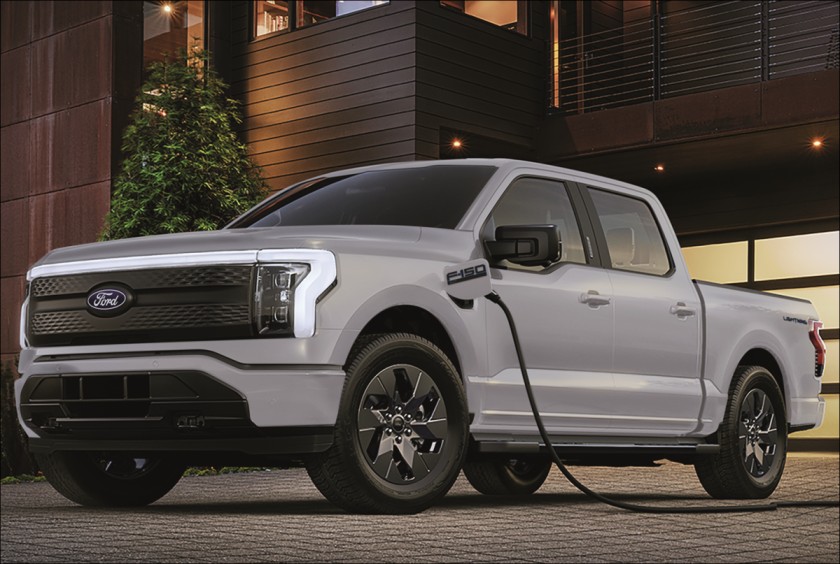
The electric Ford F-150 Lightning showcased Ford’s commitment to innovation, offering backup power capabilities and integrated power outlets. Although production ended after the 2025 model year, it marked an important technological milestone.
The F-Series’ evolution shows strategic adaptation rather than sudden reinvention — a major reason for its continued leadership.
Read More – When Is the Best Time to Buy a Car?
Full-Size Pickup Market: Competitive Landscape in 2025–2026
The full-size pickup category remains the largest and most profitable truck segment.
2025 Sales Snapshot – One of the Best-selling Truck in America
- Ford F-150: 829,000
- Chevy Silverado: 588,000
- Ram Pickup: 374,000
- GMC Sierra: 356,000
- Toyota Tundra: 147,600
The Ford F-150 continues to outsell competitors by a wide margin.
However, General Motors’ combined total from the Chevrolet Silverado and GMC Sierra exceeds Ford’s single model sales — demonstrating strong brand portfolio strength.
Segment Insights
- Full-size trucks account for the majority of towing and fleet demand.
- Heavy-duty variants support commercial sectors.
- Buyers increasingly expect advanced infotainment and driver-assistance systems.
The competition is fierce, but the hierarchy remains stable.
Ram Pickup: Market Position and Shifts
The Ram Pickup once challenged for second place between 2019 and 2022.
Its strength lies in:
- Premium interior design
- Smooth ride quality
- High-end trims like Limited and TRX variants
However, recent sales softening suggests increased competition and shifting consumer preferences. Ram remains firmly in the top three but has not regained upward momentum.
Mid-Size and Compact Pickup Growth– Best-selling Truck in America
The mid-size category has expanded as buyers look for lower price points and improved fuel economy.
Segment Leaders
The Toyota Tacoma remains dominant with strong resale values and off-road credibility.
The compact Ford Maverick appeals to urban buyers with hybrid efficiency.
The Jeep Gladiator has experienced declining sales after a strong early surge.
Mid-size trucks often attract:
- First-time truck buyers
- Younger demographics
- Urban consumers
- Budget-conscious shoppers
This segment diversifies the truck market beyond traditional heavy-duty users.
Electric Pickup Trucks: Gradual Adoption
Electric entries such as the Tesla Cybertruck and Rivian R1T have expanded awareness but remain small in total volume.
Barriers to Widespread EV Truck Adoption
- Higher purchase price
- Limited charging infrastructure in rural areas
- Towing range concerns
- Production capacity constraints
Gasoline remains dominant, while diesel continues serving heavy-duty applications.
Fuel Preferences and Usage Patterns
Pickup buyers prioritize capability over fuel type.
Current Fuel Trends:
- Gasoline: Most common for light-duty models
- Diesel: Preferred for heavy-duty towing
- Hybrid: Growing interest
- Electric: Emerging but niche
Manufacturers are focusing on efficiency improvements rather than complete fuel transitions in the short term.
Conclusion: The Long-Term Leader Remains Clear
The Best-Selling Truck in America continues to be the Ford F-Series — and 2026 marks its 50-year milestone at the top.
While competitors innovate and electric models enter the market, the full-size pickup segment remains the backbone of U.S. vehicle sales.
With projected sales reaching 3.1 million units, the American pickup truck market is not slowing down — it’s evolving.
And if trends continue, trucks will remain America’s vehicle of choice for years to come.
FAQ
What is the most popular truck in America in 2026?
The most popular truck in America in 2026 is the Ford F-Series. This marks its 50th consecutive year as the best-selling truck in the United States.
In 2025 alone, Ford sold approximately 829,000 F-150 models, and total F-Series sales across all trims exceeded that figure when including heavy-duty variants. The F-Series has maintained leadership since 1977 due to its:
- Broad lineup (F-150 through F-750)
- Strong fleet and commercial sales
- High towing and payload ratings
- Continuous design updates
- Strong brand loyalty
No other pickup truck has matched its multi-decade consistency in sales volume.
How many pickup trucks are sold annually in the United States?
Pickup truck sales in the U.S. have steadily increased in recent years:
- 2021: 2.1 million units (impacted by semiconductor shortages)
- 2022: 2.7 million units
- 2023: 2.8 million units
- 2024: 2.9 million units
- 2025: Approximately 3 million units
- 2026 (projected): Around 3.1 million units
This growth reflects strong demand in construction, small business, rural markets, and lifestyle buyers. Pickup trucks now represent one of the largest and most stable vehicle segments in the American automotive market.
Why are pickup trucks more popular than cars in America?
Pickup trucks have overtaken traditional sedans because they offer greater flexibility and long-term value. In 2023, 3.7 light trucks were sold for every passenger car — a clear shift in consumer preference.
Key reasons include:
- Versatility: Suitable for work, family transport, and recreation
- Towing and hauling capability
- Higher ground clearance and perceived safety
- Luxury interior options rivaling SUVs
- Strong resale values
- Business tax advantages for some buyers
Modern pickup trucks also offer advanced safety systems, touchscreen infotainment, and hybrid powertrains — features once limited to premium SUVs.
Which truck brand sells the most overall in America?
When evaluating individual models, Ford leads with the F-Series.
However, when combining General Motors’ full-size pickups:
- Chevrolet Silverado
- GMC Sierra
GM’s total 2025 sales reach approximately 944,000 units, which exceeds Ford’s single-model total.
So the answer depends on measurement:
- Single best-selling truck model: Ford F-Series
- Combined brand family sales: GM full-size trucks
Both remain dominant forces in the American pickup market.
What is the best-selling mid-size truck in America?
The best-selling mid-size pickup truck in 2025 is the Toyota Tacoma, with over 274,000 units sold.
The Tacoma leads the segment due to:
- Strong reliability reputation
- High resale value
- Off-road performance trims (TRD models)
- Broad dealership network
- Long production history in the U.S.
It consistently outsells competitors such as the Ford Ranger, Chevy Colorado, and Nissan Frontier in the mid-size category.
Are electric trucks replacing gasoline trucks?
No, electric trucks are not replacing gasoline trucks — at least not yet.
Electric models like the Tesla Cybertruck and Rivian R1T are growing in popularity, but they represent a small percentage of total pickup sales.
Current market realities include:
- Gasoline remains the dominant fuel type.
- Diesel continues to power heavy-duty work trucks.
- Electric trucks face range and charging infrastructure challenges.
- EV pickups often carry higher purchase prices.
That said, manufacturers are investing heavily in hybrid and electric technology, suggesting gradual long-term adoption rather than rapid replacement.
Will the Ford F-Series remain the best-selling truck in America?
Based on 50 years of historical dominance and strong projected 2026 sales, the F-Series is well positioned to remain the market leader.
However, increasing competition from GM, Ram, Toyota, and emerging electric manufacturers could narrow the gap over time.
Market leadership will depend on:
- Fuel efficiency improvements
- Technology upgrades
- Pricing strategy
- EV transition success
- Fleet sales strength
For now, the F-Series best-selling truck in america continues to hold a significant advantage in brand equity and total sales volume.