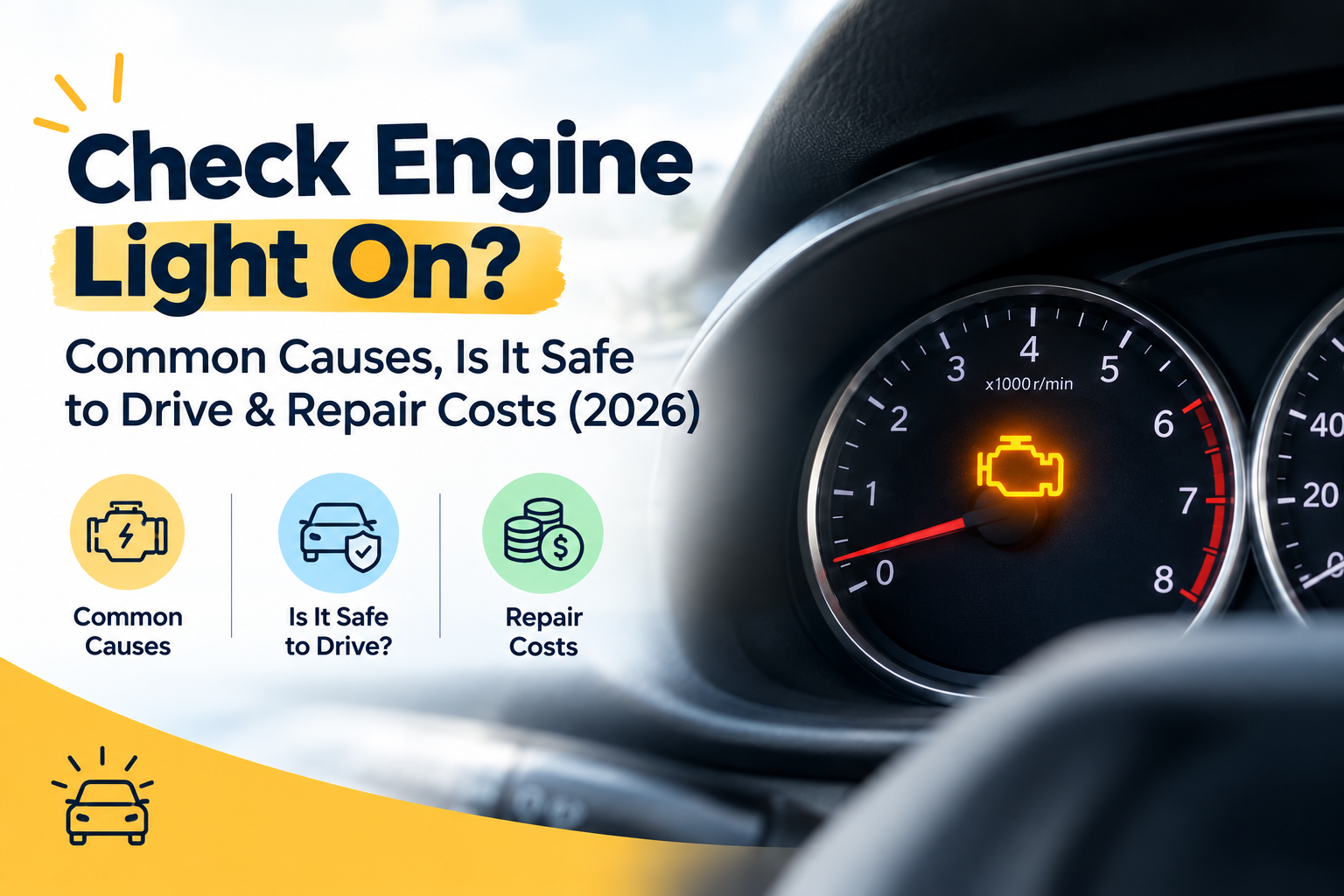
When the check engine light comes on, most drivers wonder the same thing: is this serious, can I keep driving, and how much will it cost? The answer depends on whether the light is steady or flashing and on what the car’s computer has stored. A steady light usually means a problem that should be checked soon. A flashing light means stop driving as soon as it is safe. This guide explains why your check engine light is on, the most common causes, what the light colors and flashing mean, and how to read the code yourself.
Quick Answer: What Should You Do?
- Steady check engine light, car drives normally: it is usually safe to drive a short distance. Get the code read within a few days.
- Flashing check engine light: this typically signals an active engine misfire that can damage the catalytic converter. Reduce speed, avoid hard acceleration and get the car checked right away.
- Check engine light plus smoke, overheating, loss of power or strange noises: pull over safely and call for help.
- Light came on right after fueling: check the gas cap first.
What Does the Check Engine Light Mean?
The check engine light, also called the malfunction indicator lamp or MIL, comes on when the car’s onboard diagnostics system (OBD-II) detects a problem with the engine, emissions system or related sensors. Every gas and hybrid car sold in the US since the mid-1990s has this system.
The light does not tell you what is wrong. It only tells you the computer has stored a diagnostic trouble code. You need the code to know the cause.
Steady vs. Flashing Check Engine Light
| Light behavior | What it usually means | What to do |
|---|---|---|
| Steady | A fault was detected, often an emissions or sensor issue | Schedule a diagnosis soon |
| Flashing or blinking | Often a severe misfire that can overheat the catalytic converter | Stop driving as soon as safe and get towed or inspected |
| Comes on, then goes off | Intermittent or temporary fault | Still get the code read; it stays in memory |
Color can vary by manufacturer. Some cars show an amber engine symbol for a check engine warning and a red warning light for more urgent problems such as low oil pressure or overheating. Check your owner’s manual.
10 Common Reasons the Check Engine Light Comes On
1. Loose or faulty gas cap. A cap that is not tightened can let fuel vapor escape and trigger an evaporative emissions code. Tighten it and drive for a day or two; the light may clear on its own.
2. Oxygen sensor failure. The O2 sensor measures unburned oxygen in the exhaust. A failing one can hurt fuel economy and raise emissions.
3. Catalytic converter problem. The catalytic converter cleans exhaust gases. It is often damaged by long-ignored misfires or other faults. This is one of the more expensive repairs.
4. Spark plugs or ignition coils. Worn plugs or a failing coil cause misfires, rough idle and poor acceleration.
5. Mass airflow (MAF) sensor. A dirty or failed sensor can cause stalling, hesitation or poor mileage.
6. EVAP system leak. Cracked hoses, a bad purge valve or a faulty vent valve can trigger evaporative emissions codes.
7. Vacuum leak. A leak can cause a lean condition and a rough idle.
8. Thermostat problems. If the engine does not reach normal temperature, the computer may set a code.
9. Low-quality fuel or a fueling issue. Occasionally a bad tank of gas contributes to misfires or sensor codes.
10. Battery or charging system faults. Low voltage can trigger several unrelated warning lights, including the check engine light.
Common OBD-II Trouble Codes
These are standard generic codes. The exact cause still needs diagnosis.
| Code | General meaning |
|---|---|
| P0420 | Catalyst system efficiency below threshold (bank 1) |
| P0300 | Random or multiple cylinder misfire detected |
| P0171 | System too lean (bank 1) |
| P0442 | Small EVAP leak detected |
| P0455 | Large EVAP leak detected |
A code points you toward a system, not always a specific part. Replacing parts based only on a code can waste money.
How to Read Your Check Engine Light Code
- Use an OBD-II scanner. Plug it into the port, usually under the dashboard on the driver’s side.
- Turn the ignition on and follow the scanner’s instructions.
- Write down every code, including any pending codes.
- Look up the code for your make, model and year, and check for related technical service bulletins or recalls.
- Free code reading. Many auto parts stores offer to read codes at no charge, but policies vary by store.
An inexpensive Bluetooth OBD-II reader that pairs with a phone app is a useful tool to keep in the glove box.
Is It Safe to Drive With the Check Engine Light On?
Often yes for a short time, but not always.
Usually okay for a short distance:
- Steady light.
- The car runs smoothly.
- No new noises, smells or temperature warnings.
Do not keep driving if:
- The light is flashing.
- The engine runs rough, shakes or stalls.
- You see smoke or smell burning.
- The temperature gauge is climbing.
- Oil pressure or other red warnings appear.
Ignoring a steady light can turn a cheap fix into an expensive one, especially if a misfire damages the catalytic converter.
Check Engine Light Repair Costs
Costs vary a lot by vehicle, region and shop. These are general planning ranges, not quotes:
| Repair | Typical cost level |
|---|---|
| Tightening or replacing a gas cap | Low |
| Oxygen sensor replacement | Low to moderate |
| Spark plugs or ignition coils | Moderate |
| MAF sensor cleaning or replacement | Low to moderate |
| EVAP leak repair | Low to moderate |
| Catalytic converter replacement | High |
Always ask for a written estimate that lists parts and labor, and get a second opinion for a high-cost repair. Check whether the repair is covered by your warranty. Emissions-related parts may have longer federal or state coverage.
Will the Check Engine Light Affect an Emissions Test or Inspection?
In many states, an active check engine light is an automatic failure on an emissions test or inspection. After a repair, the car may need to complete a set of self-checks, called readiness monitors, before it can pass. Clearing the codes right before a test usually does not work because the monitors will show as not ready.
How to Reset the Check Engine Light
The proper way is to fix the problem. Once the cause is repaired, the light often turns off after a few drive cycles, or a shop can clear the code. Disconnecting the battery or clearing codes without fixing the fault only hides the problem, and the light will usually return.
Check Engine Light on a Hybrid
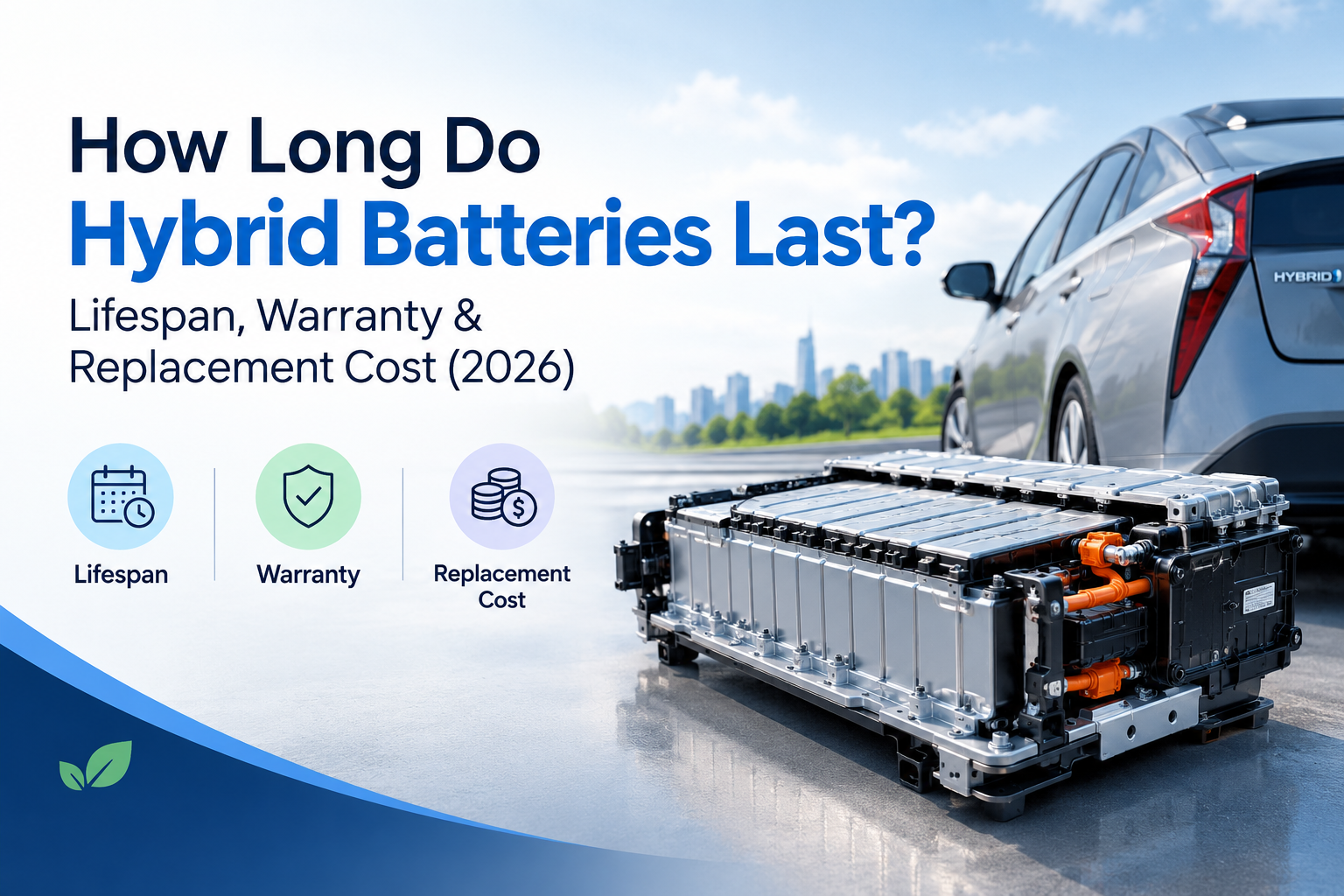
Hybrids use the same OBD-II system but also monitor the hybrid battery, inverter and related components. If you drive a hybrid, a hybrid-experienced shop is worth using. See our guide on how long hybrid batteries last for what to watch for.
Frequently Asked Questions
Why is my check engine light on but the car runs fine?
The computer can detect problems you cannot feel, such as a small emissions leak or a failing sensor. Get the code read soon.
How long can I drive with the check engine light on?
If the light is steady and the car drives normally, a short time until you can get it checked. If it is flashing, stop as soon as it is safe.
Can a loose gas cap cause a check engine light?
Yes. It is one of the most common and cheapest causes. Tighten it until it clicks and see if the light goes off after a few drives.
Will the check engine light go off by itself?
Sometimes, if the cause was temporary. But the code stays stored in the computer, and a real fault will usually bring the light back.
Can I pass inspection with the check engine light on?
In many states, no. Fix the problem and make sure the readiness monitors are complete before the test.
What is the most expensive check engine light repair?
A catalytic converter is commonly one of the costliest, which is why a flashing light should not be ignored.
Bottom Line
A check engine light is a warning, not always an emergency. A steady light means get it checked soon; a flashing light means stop and get help. Read the code with an OBD-II scanner, compare estimates, and fix the cause instead of just clearing the light. Doing so protects your engine, your fuel economy and your wallet.
Costs, laws and inspection rules vary by state and vehicle. Confirm details with a qualified mechanic.