
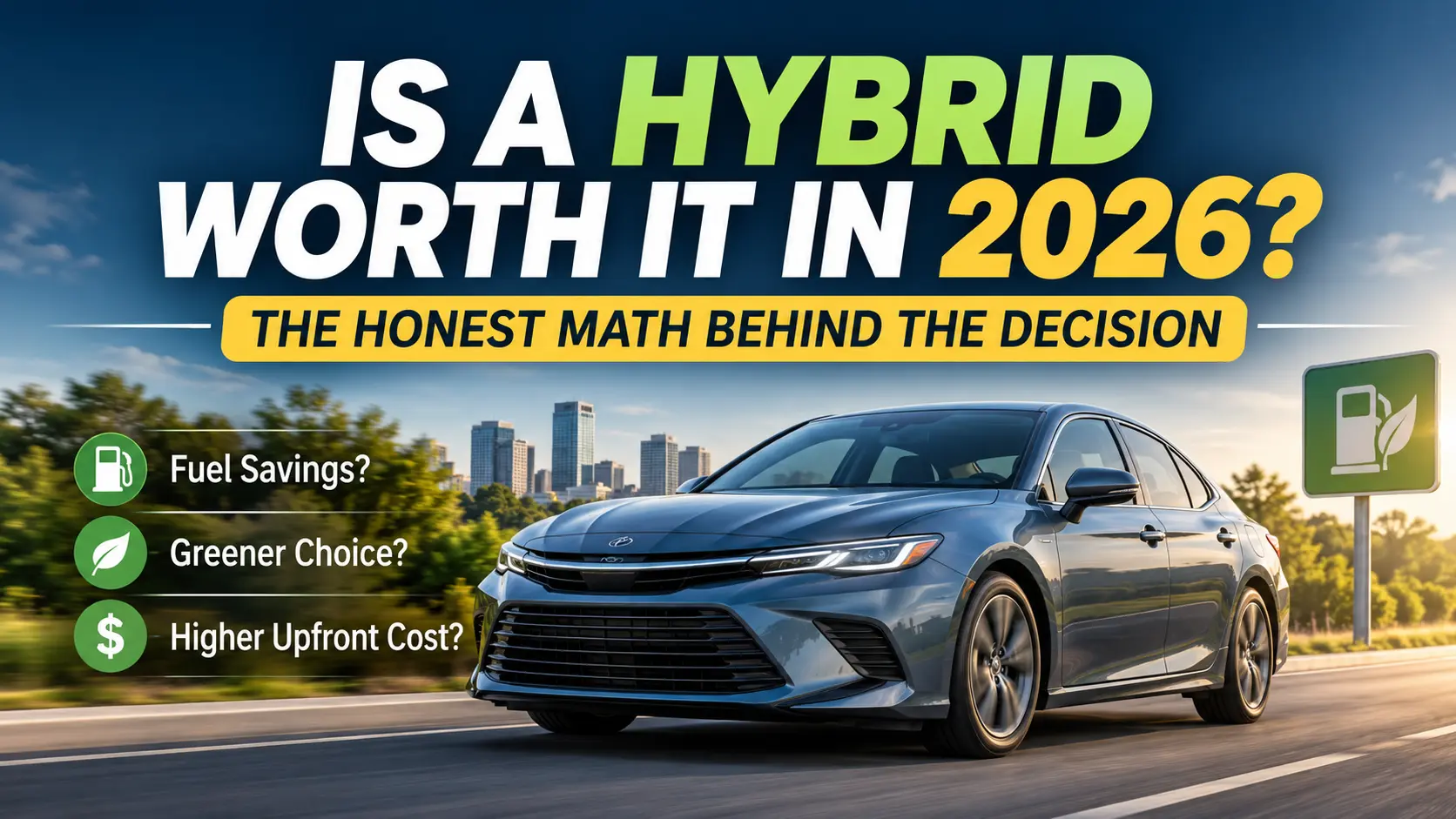
Every few years, one question returns to car lots with fresh urgency: is a hybrid worth it? Right now it is louder than usual. US gasoline has been holding around $4.28 a gallon, and GM CEO Mary Barra has said the company will add hybrids as Toyota’s electrified vehicle sales climb 28.5%, according to OilPrice.com. When the pump starts to hurt, a car that sips fuel looks far more attractive than it did a year ago.
But a hybrid also costs more to buy, and a higher sticker price is only worth paying if the savings come back to you. So instead of repeating the usual sales pitch, let’s work through the real numbers, look at the hidden costs and benefits, and identify the situations where the answer flips.
The question behind the question
When people ask whether a hybrid is worth it, they are really asking how long it takes to earn back the extra money. That is the hybrid payback period, and it depends on three things: how much more the hybrid costs than the gas version of the same car, how many miles you drive each year, and what fuel costs where you live.
The calculation is simple. Divide your yearly mileage by the car’s miles per gallon to find the gallons you burn, then multiply by the price of gas. Do that for both cars and subtract one from the other, and you have your annual savings. Divide the hybrid’s price premium by that figure and you have your break-even point.
A worked example
Suppose you drive 12,000 miles a year with gas at $4.28. A gas sedan rated at 30 MPG uses 400 gallons, which costs about $1,712. A hybrid rated at 50 MPG uses 240 gallons, which costs about $1,027. The difference is roughly $685 a year, or about $3,400 over five years. These are illustrative figures, so plug in the real ratings for the cars you are considering.
Now comes the part that decides everything: the price gap. If the hybrid costs $2,000 more, you recover that in just under three years. If it costs $4,000 more, the payback stretches to nearly six. The same fuel savings can look like a bargain or a break-even exercise depending on the trim, the dealer discount and the incentives available that month. That is why the first step is to get out-the-door quotes for both versions rather than trusting an advertised fuel economy number.
Where hybrids save more than the pump
Fuel is the headline benefit, but it is not the whole story. Hybrids recover energy when you slow down, which takes work off the brakes, and many owners find they replace pads and rotors less often than they would in a conventional car. The gasoline engine still needs oil, filters and fluids, so routine care looks familiar. If you are unsure about the basics, our guide on how often you should change your oil applies just as well to a hybrid.
Resale value also tends to favor popular hybrids. When fuel prices are high, used hybrids are in demand, which can soften depreciation. That is not guaranteed for every model, so check recent listings for the exact car you want instead of assuming.
The battery worry, put in perspective
Almost every hesitant buyer raises the same concern: what happens when the battery dies? It is a fair question, but the fear is usually larger than the reality. Most hybrid packs last well over a decade, and many carry long warranties. We cover the typical lifespan and coverage in our guide to how long hybrid batteries last, and if you want to understand the worst case, our breakdown of hybrid battery replacement cost explains what a new or remanufactured pack costs. The sensible approach is to treat the battery as a known, plannable risk rather than a reason to avoid the category.
Incentives, insurance and the small print
Before you sign, look at the costs that sit outside the sticker price. Some regions and lenders offer incentives or better terms on efficient vehicles, and these can shrink the premium noticeably. Insurance can also differ slightly between the hybrid and gas versions because repair costs and parts vary, so request quotes for both. These items rarely make or break the decision alone, but together they can move your payback period by months or even a year.
When a hybrid is not worth it
There are honest cases where the gas car wins. If you drive only a few thousand miles a year, you may never recover the premium. If you mostly cover long, steady highway stretches, the efficiency gap narrows, because hybrids shine in stop-and-go traffic where the electric motor does more of the work. And if the hybrid version of the car you want carries an unusually large price jump for a modest MPG gain, the numbers may simply not add up.
Heavy towing is another case. Hybrid trucks and SUVs have improved, but if you regularly haul near the limit of capacity, check real-world fuel economy under load before you count on the rated figure.
Hybrid, plug-in hybrid or EV?
A conventional hybrid is the easiest step. You never plug it in, and it behaves like a normal car that happens to be very efficient. A plug-in hybrid offers some electric-only range, which pays off if you can charge at home and your daily trips are short, but it costs more and adds complexity. A full EV has the lowest running costs of the three, provided you have reliable home charging and live somewhere with decent incentives. For a first-time buyer who wants savings without changing habits, the standard hybrid is usually the safest choice.
Buying new or used
Buying used can improve the math, because much of the premium has already been absorbed by the first owner. The trade-off is that battery condition matters more with age and mileage, so a careful inspection is essential. Start with our used car inspection checklist, and ask the seller for a hybrid battery health report if one is available.
If you are shopping new, compare models side by side. Our roundup of the best hybrid cars of 2026 is a good starting point, and the Toyota Camry Hybrid vs Honda Accord Hybrid comparison helps if you are choosing between the two most popular midsize options.
The verdict
So, is a hybrid worth it? For most drivers who log 10,000 miles or more a year, spend a lot of time in mixed or city traffic, and plan to keep the car at least five years, yes. The fuel savings, lower brake wear and strong resale demand usually outweigh the higher purchase price. For low-mileage drivers, or anyone facing a very large price premium, a well-chosen gas car can be the smarter buy.
The best advice is to stop relying on generalities and run your own numbers. Take your annual mileage, your local gas price and two real quotes, and work out the payback. If it lands under about five years and you will own the car that long, the hybrid has earned its place in your driveway.

