
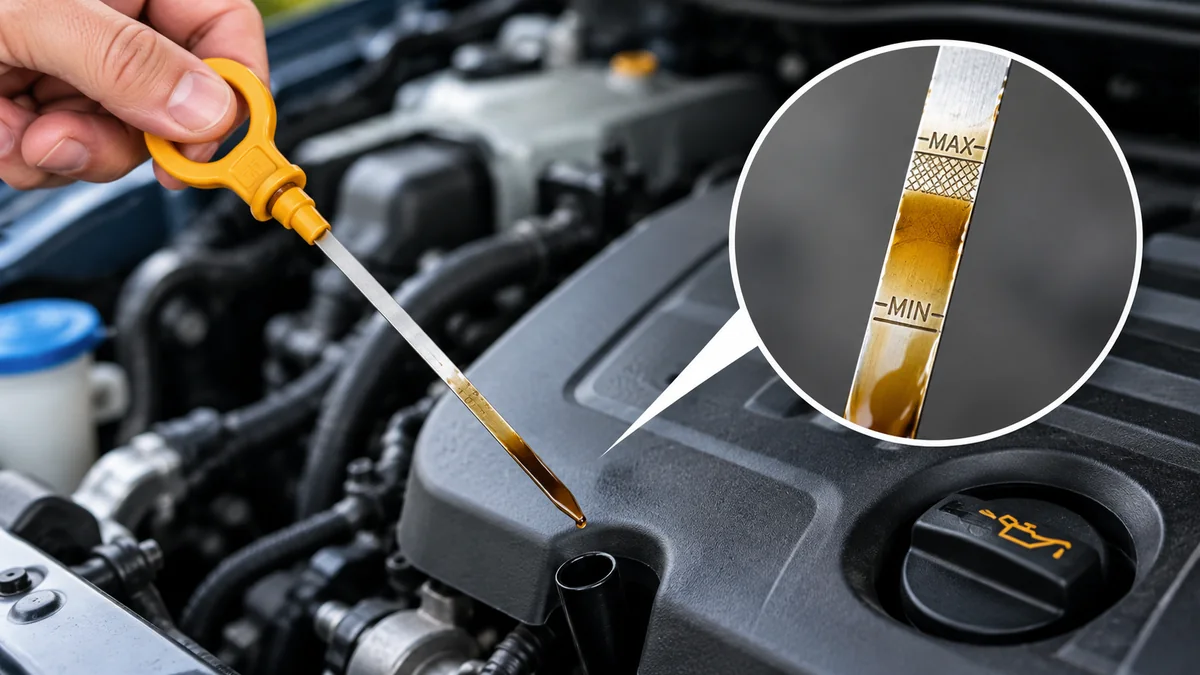
Knowing how to check engine oil is an essential part of car maintenance. Whether you drive a petrol car, diesel vehicle, SUV, or pickup truck, checking your engine oil regularly helps maintain proper lubrication, reduce engine wear, and identify potential problems before they become expensive repairs.
If you want to know how to check oil in a car, the process is simple. Park your vehicle on level ground, switch off the engine, follow the manufacturer’s recommended waiting time, and use the engine oil dipstick to check whether the oil level falls between the minimum and maximum marks. Some newer vehicles use an electronic oil-level monitoring system instead.
In this guide, you’ll learn how to check your oil, how to read a dipstick correctly, when to check oil on a car, how to identify low engine oil levels, and what to do if your car needs more oil.
How Do You Check Oil in a Car?
To check oil in a car, park on level ground and switch off the engine. Follow your owner’s manual for the correct engine temperature and waiting period. Remove the dipstick, wipe it clean, reinsert it fully, and pull it out again. Check that the oil level is between the minimum and maximum marks. If the level is low, add the manufacturer-recommended engine oil in small amounts and recheck it.
Why Is Checking Engine Oil Important?
Engine oil lubricates moving parts, reduces friction, helps control heat, and carries contaminants toward the oil filter. Maintaining the correct oil level helps your engine operate as designed.
Regularly checking car oil can help you:
- Prevent engine damage: Insufficient oil can increase friction and accelerate wear on engine components.
- Identify oil leaks: A falling oil level may indicate a leak or excessive oil consumption.
- Maintain engine performance: The correct oil level supports effective lubrication.
- Avoid unexpected breakdowns: Checking oil before a long journey can help identify problems early.
- Monitor engine condition: Unusual changes in oil level or appearance may indicate a mechanical issue.
Checking engine oil does not replace scheduled oil and filter changes. It is an additional maintenance task that helps you monitor your vehicle between services.
How to Check Engine Oil in a Car: Step-by-Step Guide
If you’re wondering how to check engine oil in a car at home, follow these eight steps. Most vehicles with a conventional dipstick can be checked in approximately five to ten minutes.
Step 1: Park Your Car on Level Ground
Park your vehicle on a flat, level surface. An inclined driveway or uneven parking space can affect the oil reading because the oil may not settle evenly in the oil pan.
Switch off the engine, engage the parking brake, and secure the vehicle before opening the hood.
Step 2: Check the Recommended Engine Temperature
Before checking your oil, consult your vehicle’s owner’s manual. Some manufacturers recommend checking the oil when the engine is cold, while others specify checking it after the engine has warmed up and then been switched off for a particular waiting period.
Follow the procedure specified for your vehicle rather than assuming every car uses the same method.
If the engine has recently been running, be careful around hot components. Never reach near moving belts or fans.
Step 3: Locate the Engine Oil Dipstick
Open the hood and secure it properly. Look for the engine oil dipstick, which often has a yellow or orange handle or a distinctive symbol.
The dipstick is used to measure the engine oil level. Do not confuse it with the oil filler cap, which is used to add oil.
What if your car doesn’t have a dipstick?
Some newer vehicles use an electronic oil-level monitoring system. Check your dashboard or vehicle settings menu and follow the instructions in your owner’s manual.
Step 4: Remove and Clean the Dipstick
Pull the dipstick completely out of its tube and wipe it clean using a lint-free cloth or paper towel.
Cleaning the dipstick removes residual oil that may have spread along the rod during removal. This makes it easier to obtain an accurate reading when you check the oil again.
Step 5: Reinsert the Dipstick Fully
Slide the clean dipstick back into its tube until it is fully seated.
Make sure it reaches its normal position. If the dipstick is not inserted completely, the reading may be inaccurate.
Step 6: Pull Out the Dipstick and Check the Oil Level
Remove the dipstick again and hold it horizontally. Examine the oil markings near the tip.
Most dipsticks have two marks or a clearly marked area indicating the acceptable oil range.
- Below MIN or LOW: The oil level is below the recommended range.
- Between MIN and MAX: The oil level is generally within the acceptable range.
- At or near MAX or FULL: The oil is near the upper limit, so adding more is usually unnecessary.
- Above MAX or FULL: The engine may be overfilled and may need corrective action.
If you cannot read the oil level clearly, wipe the dipstick and repeat the checking process.
The distance between the minimum and maximum marks varies by engine. Do not assume it always represents one litre or one quart; consult your owner’s manual for the correct capacity.
Step 7: Add Engine Oil if the Level Is Low
If the oil level is below the minimum mark, check your owner’s manual for the correct oil type, viscosity grade, and manufacturer specification.
Remove the oil filler cap and add a small amount of the recommended oil. Use a funnel if necessary to avoid spills.
Wait for the oil to drain into the sump, then check the dipstick again. Continue adding small amounts until the level reaches the acceptable range.
Important: Never overfill your engine. Excess oil can cause foaming, leaks, increased crankcase pressure, and other mechanical problems.
If no oil is visible on the dipstick, the oil-pressure warning light is on, or you suspect a significant leak, do not continue driving without addressing the problem. A red oil-pressure warning while the engine is running requires you to stop safely and switch off the engine.
Step 8: Secure the Dipstick and Oil Filler Cap
Once the oil level is correct, fully reinsert the dipstick and securely replace the oil filler cap if you removed it.
Wipe away any spilled oil and close the hood. If you regularly monitor your engine oil, record the current mileage and oil level to help identify unusual oil consumption.
How to Check Engine Oil Level in a Car: Understanding the Dipstick
Knowing how to check engine oil level in a car is only part of the process. You also need to understand what the dipstick reading means.
| Oil dipstick reading | What it means | What to do |
|---|---|---|
| Below the minimum mark | Oil is below the recommended range | Add the specified oil carefully and investigate recurring oil loss |
| Between minimum and maximum | Oil level is generally acceptable | No additional oil is normally needed |
| Near the maximum mark | Oil is close to the upper limit | Avoid adding more oil |
| Above the maximum mark | Engine may be overfilled | Have the level checked and corrected if necessary |
| No visible oil | Level may be critically low or the reading may be incorrect | Repeat the check and seek professional assistance if the result remains unclear |
When checking car oil with a dipstick, look for a clear oil line rather than relying only on the colour of the oil. If the reading appears smeared, wipe the dipstick and repeat the procedure.
Remember that a correct oil level does not necessarily mean the engine’s oil pressure is healthy. If an oil-pressure warning appears, treat it as a separate and potentially serious problem.
When to Check Oil on a Car
If you’re asking when to check oil on a car, a practical starting point is to check it approximately once a month, before long road trips, and whenever you notice signs of an oil-related problem.
You may need to check your oil more frequently if:
- Your car is older or has high mileage.
- The engine consumes oil between scheduled services.
- You notice oil spots under the vehicle.
- You regularly drive in heavy traffic or demanding conditions.
- Your manufacturer recommends more frequent oil-level inspections.
Always follow your vehicle’s maintenance schedule and owner’s manual for the recommended inspection frequency.
Should You Check Engine Oil When the Engine Is Hot or Cold?
The answer depends on your vehicle. Some manufacturers recommend checking oil before starting a cold engine, while others specify a warm engine followed by a waiting period.
Do not assume that checking immediately after switching off the engine will give the correct reading for every vehicle. Follow the manufacturer’s recommended temperature and waiting time.
Should You Check Oil Before or After Driving?
For many vehicles, checking the oil before driving, when the engine is cold, is convenient and helps avoid contact with hot components. However, some manufacturers specify a warm-engine procedure.
The correct method is the one stated in your owner’s manual.
What Does Engine Oil Look Like When It Needs Attention?
Oil colour can provide useful clues about engine condition, but colour alone cannot determine whether the oil needs replacing.
- Amber or light brown: Common for relatively fresh engine oil.
- Dark brown or black: Can be normal as oil collects contaminants during use, particularly in diesel engines.
- Milky or creamy: May indicate moisture contamination or coolant mixing with oil, although condensation can also cause a milky appearance in some circumstances.
- Visible metallic particles: May indicate abnormal engine wear and should be investigated.
Pay attention to sudden changes in oil level, unusual smells, persistent smoke, or new engine noises. If you notice these signs, arrange a professional inspection rather than relying on colour alone.
Signs Your Car May Have an Engine Oil Problem
Even if you know how to check your oil in your car, it is important to recognise signs that something may be wrong.
1. Engine Oil Warning Light
A red oil-pressure warning light may indicate dangerously low oil pressure. Pull over safely, switch off the engine, and consult your owner’s manual. Do not continue driving simply because the dipstick shows an acceptable oil level.
2. Oil Leaks Under the Car
Dark, oily spots beneath a parked vehicle may indicate a leak from a seal, gasket, drain plug, or another engine component.
3. Repeatedly Low Oil Levels
If the oil level keeps falling between checks, your engine may be consuming oil or leaking it. Track the mileage and oil added, and arrange an inspection if the loss is significant or recurring.
4. Unusual Engine Noises
New knocking or ticking sounds may indicate a lubrication problem or another mechanical fault. Stop driving if the noise is severe or accompanied by an oil-pressure warning.
5. Burning Oil Smell or Smoke
A burning-oil smell or smoke from the engine bay may indicate oil contacting hot components or another problem. Pull over safely if necessary and have the vehicle checked.
Common Mistakes to Avoid When Checking Car Oil
Avoid these mistakes to make sure you obtain a reliable reading and maintain the correct oil level.
- Checking oil on an uneven surface.
- Ignoring the manufacturer’s instructions about engine temperature.
- Forgetting to wipe the dipstick before taking a reading.
- Failing to reinsert the dipstick completely.
- Adding oil without checking the recommended specification.
- Overfilling the engine beyond the maximum mark.
- Ignoring repeated oil loss or visible leaks.
- Assuming that a normal oil level rules out an oil-pressure problem.
A few minutes spent checking your car’s oil correctly can help you identify potential issues before they become more serious.
Read More: Check Engine Light On?
Frequently Asked Questions About Checking Engine Oil
1. How do you check oil in a car?
Park your car on level ground, switch off the engine, and follow the manufacturer’s instructions for the correct temperature and waiting time. Remove the dipstick, wipe it clean, reinsert it fully, and pull it out again. The oil level should fall between the minimum and maximum marks.
2. How to check engine oil level in a car without a dipstick?
Some modern cars use an electronic oil-level monitoring system instead of a conventional dipstick. Check the dashboard or vehicle settings menu and follow the instructions in your owner’s manual. Do not assume every vehicle has an electronic system.
3. How to check your oil in your car when the engine is cold?
Park on level ground and make sure the vehicle is secure. If your manufacturer recommends a cold-engine check, remove and clean the dipstick, reinsert it fully, and check the oil level again. Add the specified oil only if needed.
4. How often should you check your engine oil?
For many drivers, checking engine oil approximately once a month is a sensible maintenance habit. Check it before long journeys and more frequently if your vehicle consumes oil, has high mileage, or has a history of leaks. Follow the manufacturer’s maintenance recommendations.
5. Can you check engine oil immediately after driving?
Not always. Some vehicles require the engine to be switched off for a specified period before checking, while others recommend a cold-engine reading. Follow the procedure in your owner’s manual to obtain an accurate result and avoid hot engine components.
6. What should I do if the engine oil level is below minimum?
Add the correct engine oil in small amounts and recheck the dipstick. If the level continues to fall, investigate possible leaks or excessive oil consumption. If no oil is visible on the dipstick or an oil-pressure warning is illuminated, stop driving and seek appropriate assistance.
7. Is dark engine oil bad?
Not necessarily. Engine oil commonly becomes darker during normal use, and diesel engine oil can darken relatively quickly. Colour alone does not establish whether oil needs changing. Consider the service interval, contamination, oil level, and any unusual symptoms.
8. Can I add engine oil without changing it?
Yes. Topping up may be appropriate when the oil level is low and the existing oil is suitable. However, adding oil does not replace a scheduled oil and filter change.
9. What happens if I put too much oil in my car?
Overfilling can cause oil foaming, increased crankcase pressure, leaks, and other problems depending on the engine design and the amount of excess oil. If the level is above the maximum mark, have it checked and corrected according to the manufacturer’s procedure.
10. Do electric cars need engine oil checks?
Fully electric vehicles do not have conventional combustion engines and therefore do not require engine oil checks in the same way petrol and diesel cars do. They may still require inspections or servicing of other lubricants and fluids.
Final Thoughts
Learning how to check engine oil is one of the easiest ways to take better care of your vehicle. By following the correct dipstick procedure, checking oil at the recommended intervals, and using the specified engine oil, you can monitor your engine’s lubrication and identify potential problems early.
Make checking oil part of your regular car maintenance routine, particularly before long journeys. If your oil level repeatedly drops, investigate the cause instead of continually topping it up. And never ignore an oil-pressure warning, even if the dipstick reading appears normal.
Remember: Regular oil-level checks, timely oil changes, and following your manufacturer’s maintenance schedule can help keep your engine running reliably.

